An electronic signature is a digital action — a click, a typed name, a drawn signature — that captures a person's consent to be bound by the content of a document.
E-signatures are legally recognized in most countries, but the rules vary by region. In the EU, the reference framework is eIDAS, which defines three signature levels with increasing security and legal weight.
The eIDAS framework
eIDAS creates a common standard for e-signatures across all EU member states. It distinguishes three levels — SES, AES and QES — based on how securely the signer's identity is verified. Most providers can offer SES and AES without formal accreditation. QES, however, requires the provider to be certified as a Qualified Trust Service Provider (QTSP) by a national authority (e.g. ANSSI in France).
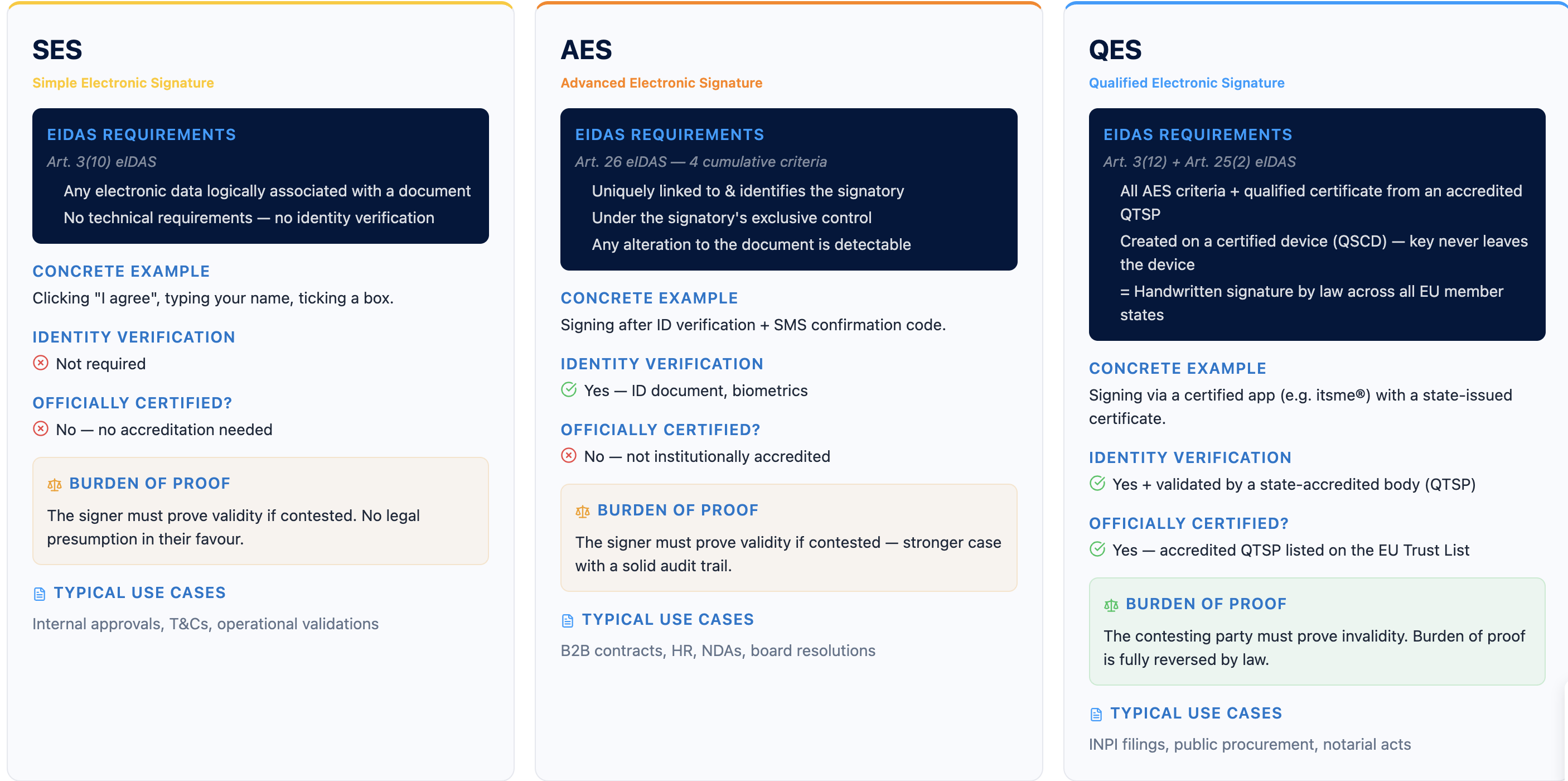
Market ambiguity: The terms SES, AES and QES are frequently misused by providers — including well-known ones. Only QES is officially certified. AES is a technical standard, not an accreditation. Never promise "full eIDAS compliance" without specifying the level and context of use.
✨ E-signature around the world
Electronic signatures are also legally recognized in other countries, but frameworks vary by region. Here is an overview of the main standards outside the EU.
Electronic signatures are a legal tool — choosing the right level for each document ensures your agreements are enforceable, wherever you do business. ✨
Was this article helpful?
That’s Great!
Thank you for your feedback
Sorry! We couldn't be helpful
Thank you for your feedback
Feedback sent
We appreciate your effort and will try to fix the article